

Skip to content
StrikeCyberStrikeCyber
Capability

Adversary Simulation

Continuous, technique-level exercise of your detection and response, so you find out what fires and what does not before an actual intruder does.

Adversary simulation exercises real attacker techniques against your environment on a continuous basis, and measures precisely what your detection and response produced in reply.

Controls Deployed Is Not Controls Working

Most organizations can list their security tooling. Very few can say, with evidence, which specific attacker techniques that tooling would actually catch. The gap between those two things is where incidents happen, and it is almost never uniform: a program will have excellent coverage of initial access and none of lateral movement, or alerting that fires reliably in the test tenant and not in production after a configuration change nobody documented.

Simulation closes that gap by treating detection as something to be measured rather than assumed. Each technique is executed under agreed authorization, timestamped, and reconciled against your alerts, tickets and analyst actions. The output is a technique-by-technique picture: what fired, how quickly, what your team did, and what produced no signal whatsoever. That last category is usually the most valuable, because it converts directly into a detection engineering backlog with clear priorities.

The value compounds with repetition. You build a detection, verify it fires, and then confirm it still fires three months later after a tooling upgrade or a policy change. Configuration drift is real, and a control that worked at deployment is not necessarily a control that works today. A single simulation is a snapshot; a program is an assurance capability.

  • Technique-level exercises mapped to MITRE ATT&CK
  • Announced or unannounced, depending on what you need to measure
  • Time to detect and time to respond, measured per technique
  • Synthetic data only for exfiltration testing, never your real records

Simulation is driven by threat intelligence, so the techniques exercised reflect the actors that target your sector, and it complements periodic red teaming with continuous assurance in between. Get in touch to discuss a program.
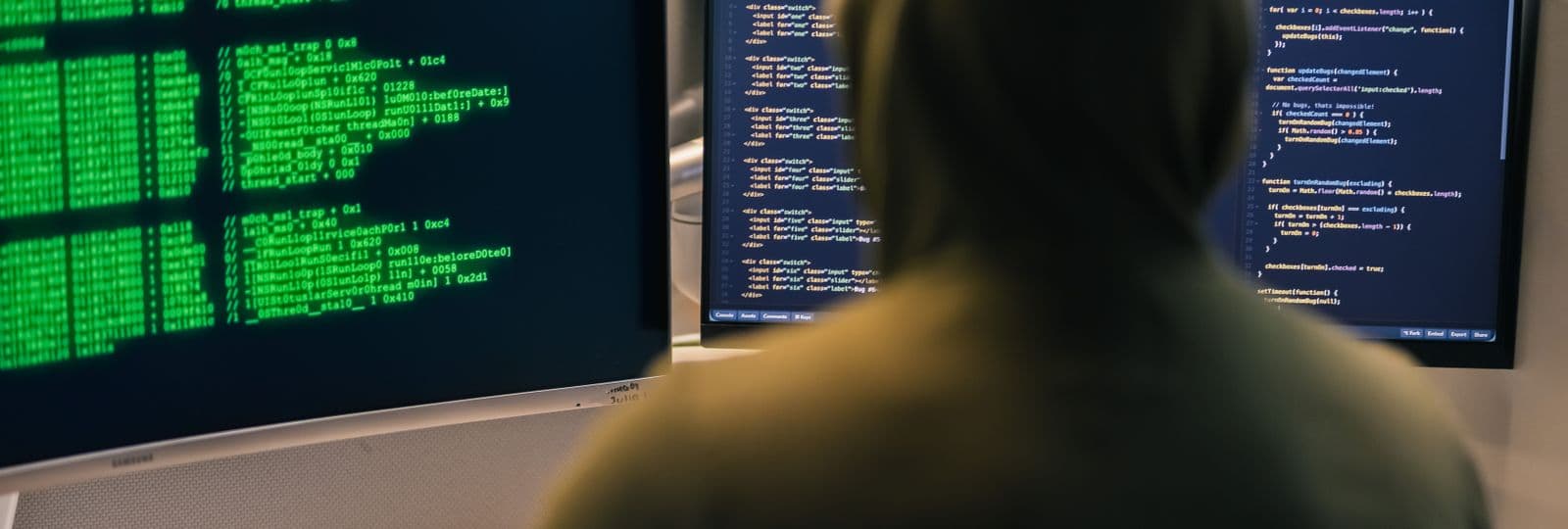
An operator working across code and terminal screens
Adversary Simulation

Testing detection and response against real tradecraft.

Techniques

What We Simulate

Each simulation exercises a stage of a real intrusion and measures what your people, process and tooling produced in response.

01

Perimeter Breach Simulation

Exercising the external attack paths adversaries actually use to get in, and measuring whether anything noticed the attempt.

Our methodology

Controlled exploitation of exposed services, credential stuffing against authentication surfaces, and abuse of remote access, each executed with timestamps recorded so your team can reconcile telemetry against what genuinely happened.

  • Exposed services
  • Credential stuffing
  • Remote access
  • Detection timing
02

Initial Access and Payload Delivery

Testing whether email, endpoint and identity controls stop the delivery methods currently in use, rather than the ones that were common when the controls were configured.

Our methodology

Payload and lure techniques reflecting current adversary behavior, delivered under agreed authorization, exercising mail filtering, endpoint detection, application control and the identity workflows attackers now target directly.

  • Current tradecraft
  • Endpoint detection
  • Application control
  • Identity workflows
03

Active Directory Attack Simulation

Exercising the identity attacks that turn a single compromised account into domain-wide access, and checking whether any of them generate an alert.

Our methodology

Kerberoasting, AS-REP roasting, delegation abuse, certificate services misconfiguration and credential dumping, executed safely and mapped to MITRE ATT&CK so each technique corresponds to a detection you can build and verify.

  • Kerberos abuse
  • AD CS
  • Credential dumping
  • Detection mapping
04

Lateral Movement Simulation

Testing whether movement between systems and network segments is constrained and observed, which is where segmentation claims meet reality.

Our methodology

Remote execution, service abuse, token manipulation and pass-the-hash techniques exercised across segments, establishing both whether movement is possible and whether the telemetry to see it exists.

  • Segmentation
  • Remote execution
  • Token abuse
  • Telemetry coverage
05

Data Exfiltration Simulation

Testing whether data leaving your environment is detected or prevented, using synthetic material rather than your real records.

Our methodology

Staging, compression, encryption and egress over multiple channels including DNS, cloud storage and encrypted web traffic, exercising data loss prevention, egress filtering and network detection with marked synthetic data.

  • Synthetic data only
  • Egress channels
  • DLP testing
  • Network detection
06

Detection and Response Measurement

The output that makes the rest worthwhile: a measured view of what your tooling saw, what your team did, and how long each took.

Our methodology

Every technique is timestamped and reconciled against your alerts, tickets and analyst actions, producing time to detect and time to respond per technique, alongside a clear list of what produced no signal at all.

  • Time to detect
  • Time to respond
  • Coverage gaps
  • Measured baseline
AI-augmented methodology

Machine Speed, Operator Judgment

Automation covers the volume so our operators can spend their time where human judgment wins. Every result is verified by an expert before it reaches you.

Our work aligns to recognized standards including the OWASP Testing Guide and ASVS, PTES, NIST SP 800-115, OSSTMM and MITRE ATT&CK.

How the platform works
01

Autonomous reconnaissance

Continuous mapping of your external attack surface, surfacing new exposures the moment they appear.

02

AI-assisted exploit chaining

Individual weaknesses connected into realistic, high-impact attack paths a real adversary would take.

03

Continuous validation

Findings reflect your live environment, not a stale snapshot, so you act on what is true today.

04

AI-accelerated reporting

Evidence turned into clear, prioritized guidance in a fraction of the usual time, every result human-verified.

How an engagement runs

A tested process, not a black box

Every StrikeCyber engagement follows the same disciplined path, so you always know where you are and what comes next.

  1. 01

    Scope & kick-off

    We agree targets, rules of engagement, timing and success criteria. No surprises, fixed scope, fixed price.

  2. 02

    Offensive testing

    AI-augmented reconnaissance and manual exploitation across your networks, applications, cloud and people.

  3. 03

    Real-time critical alerts

    Anything critical or actively exploitable is escalated the moment we find it, not weeks later in a report.

  4. 04

    Report & debrief

    A prioritized report with reproducible steps and a live debrief for your technical and executive stakeholders.

  5. 05

    Retest & validate

    Once you remediate, we retest to prove the fix holds. Typically one business day per component.

What you receive

Deliverables Built to Be Acted On

Reports engineers can execute against and boards can understand, backed by a live portal from kick-off to retest.

01

Prioritized findings

Every issue ranked by real-world risk and exploitability, not raw scanner severity, so your team fixes what matters first.

02

Reproducible evidence

Step-by-step proof and artefacts for each finding, so engineers can confirm, reproduce and remediate without guesswork.

03

Risk ratings & impact

Clear likelihood and business-impact ratings, mapped to CVE identifiers and the controls behind each weakness.

04

Remediation guidance

Practical, environment-specific fixes and hardening advice, written for your stack and your tooling.

05

Board-ready summary

An executive briefing that translates technical risk into business language for leadership and directors.

06

Live client portal

Track findings, remediation status and retests in real time, with critical issues escalated the moment we find them.

FAQ

Adversary Simulation FAQs

How is adversary simulation different from a red team?

A red team is a single covert engagement pursuing an objective, and it answers whether a determined attacker would succeed. Adversary simulation is continuous and technique-level: it exercises specific behaviors repeatedly and measures detection and response for each one. A red team tells you whether you would be breached; simulation tells you which of your detections work, which is what you need to improve them.

Will this generate false alarms for our security team?

Only if you want it to. Simulations can run fully announced, so your team knows the window and treats alerts as an exercise, or unannounced, so you measure genuine response behavior. Many organizations start announced to build detections and move to unannounced once coverage is established.

Do you exfiltrate our real data?

Never. Exfiltration simulation uses synthetic, marked material generated for the exercise. The point is to test whether egress channels are monitored and controlled, and that works exactly as well with manufactured data as it would with yours, without the risk.

What if our detection coverage turns out to be poor?

Then you have learned it from an exercise rather than an incident, which is the entire point. The output is a technique-by-technique map of what produced signal and what did not, which converts directly into a detection engineering backlog. Most organizations find their coverage is uneven rather than absent: strong on some stages, blind on others.

How often should simulations run?

Monthly or quarterly works for most organizations. The value compounds with repetition, because you build a detection, verify it fires, and then confirm it still fires after the next tooling change or configuration drift. A single simulation is a snapshot; a program is an assurance capability.

Does this require us to have a mature security operations capability?

It requires you to have telemetry and somebody who acts on it, whether that is an internal team or a managed provider. If neither exists yet, the honest recommendation is to start with [penetration testing](/solution/penetration-testing/) and a [maturity assessment](/solution/maturity-level-assessments/), because measuring a response capability you do not yet have is not a good use of budget.

Ready to take the offensive?

StrikeCyber specializes in penetration testing and red teaming engagements that deliver actionable findings. Connect with us for a free consultation.

No obligation, no sales pressure. A senior operator replies within one business day.

(877) 657-8496Free Consultation